Updated October 15, 2026 · By Brian Smith
On its own trailer, or without one
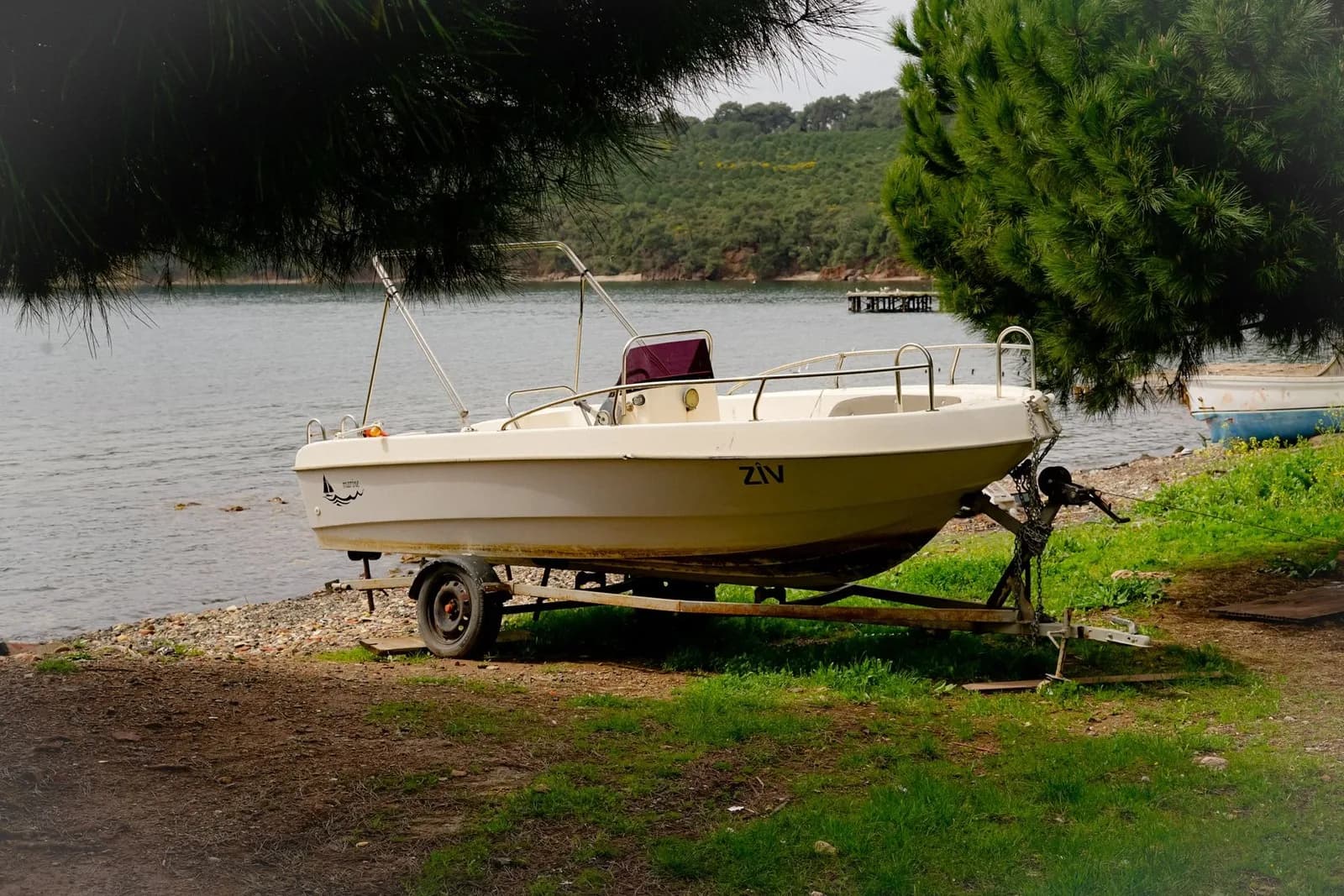
A boat on a road-ready trailer is towed by a carrier with a truck rated for the combined weight, so the trailer’s tires, bearings, lights and brakes have to be in working order for the whole trip. A boat with no trailer, or with a trailer that is not fit for the road, needs a hydraulic boat trailer or a deck with a proper cradle and supports, and loading at each end. That is a different carrier and usually a different price, so tell me which applies before anything else.
The measurements that set the price
- Length overall, including the outboard motor, swim platform and pulpit.
- Beam: the widest point of the hull.
- Height on the trailer, measured to the highest fixed point: windshield, T-top, tower or radar arch.
- Weight: the boat’s dry weight, plus the trailer if it travels with it.
- Type: bass boat, pontoon, center console, cabin cruiser, sailboat or personal watercraft.
Small differences matter. A few inches of beam can move a boat into oversize, and a tower that cannot fold down can rule out a route with low bridges. Measure rather than estimate, and send photos of the boat on its trailer.
Wide and tall boats
A boat wider than 8 feet 6 inches is an oversize load on most U.S. roads and needs a permit in every state it crosses. Wider boats can also need escort vehicles and are often limited to daytime travel, which adds time as well as cost. Tall boats may need a tower, radar arch or bimini taken down. Permits and routing are arranged before the move as part of the quote.
Sailboats
A sailboat travels with the mast unstepped and secured alongside, and the keel decides what trailer or cradle it needs. Tell me the keel type and the draft along with the length and weight, and plan who will unstep and step the mast at each end.
Preparing a boat for transport
- Drain all water, pull the drain plugs, and leave the fuel tank low.
- Disconnect the batteries and secure the cables.
- Remove electronics, cushions, fishing gear and anything loose; tape or lock hatches and windows.
- Take off canvas covers and bimini tops that could tear at highway speed, or strap them down tight.
- Raise and secure the outdrive or outboard for the road.
- Photograph the hull and deck from every side before pickup.
Marinas, storage yards and delivery
Many boats are picked up from a marina or a storage yard. Check that the truck can get in, whether the marina needs to lift the boat onto a trailer, and who will release it if you are away. Tell me the same about the delivery end, so the carrier is not left waiting at a closed gate.
Does the carrier’s insurance cover my boat and its trailer?
Ask before pickup. A boat on its own trailer is two things on the road, so check whether the carrier’s certificate names both and what the limit is for each. Electronics and gear left aboard are usually not covered, which is one more reason to take them off. Have the title or registration ready for the driver; the price guarantee explains what is fixed once your price is confirmed.
Written by Brian Smith, Auto Transport Manager at Leader Auto Ship LLC — FMCSA licensed property broker, MC #1638331, DOT #4232283. Verify the licence yourself.