Updated September 29, 2026 · By Brian Smith
What door to door means
It means the carrier picks your car up at your address, or as close as a full-size truck can legally and safely get, and delivers it to the destination address the same way. The alternative, terminal to terminal, has you drop the car at a lot and collect it from another, often with storage charges if you are late. Door to door is what every rate band on this site includes.
The truck is bigger than your street
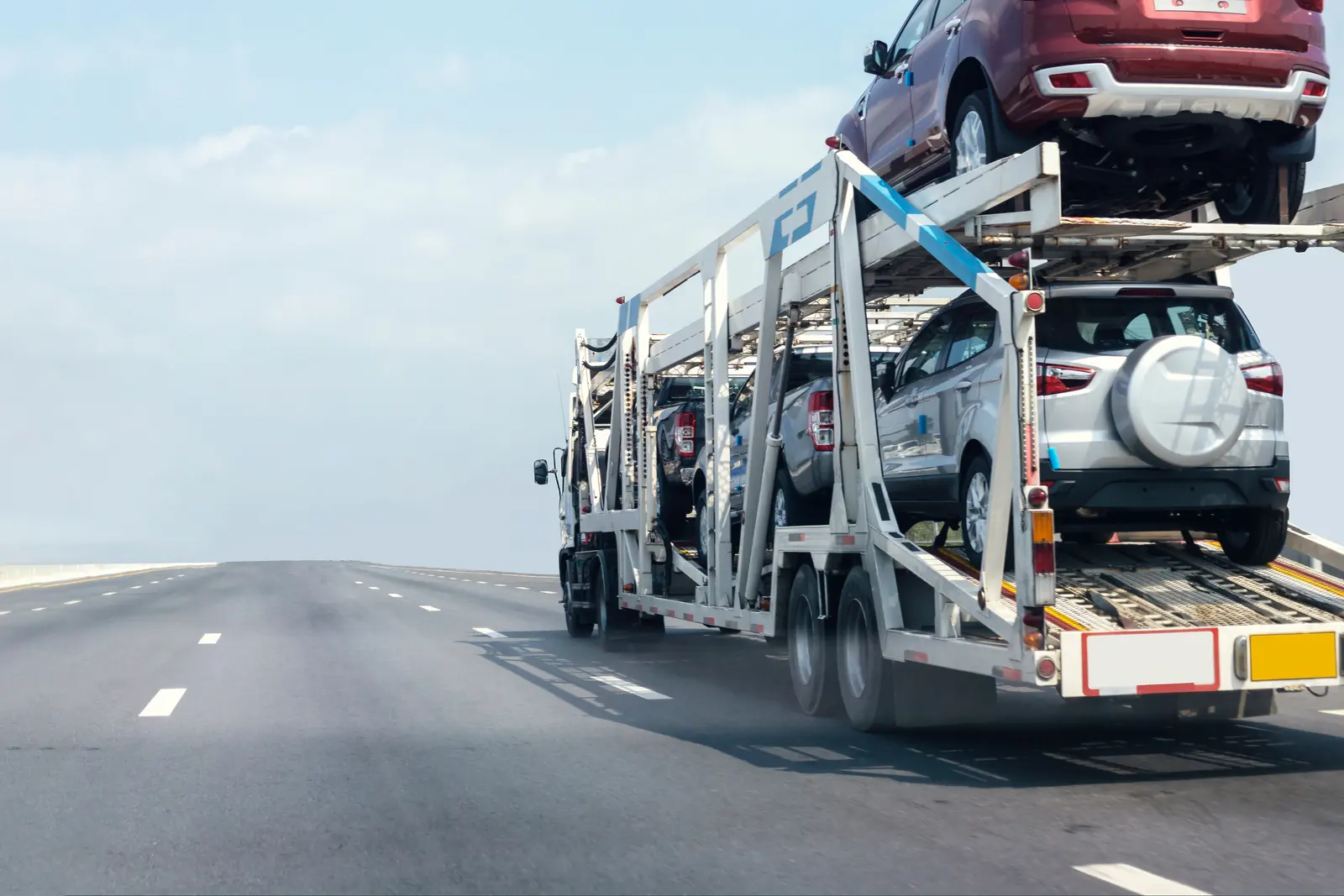
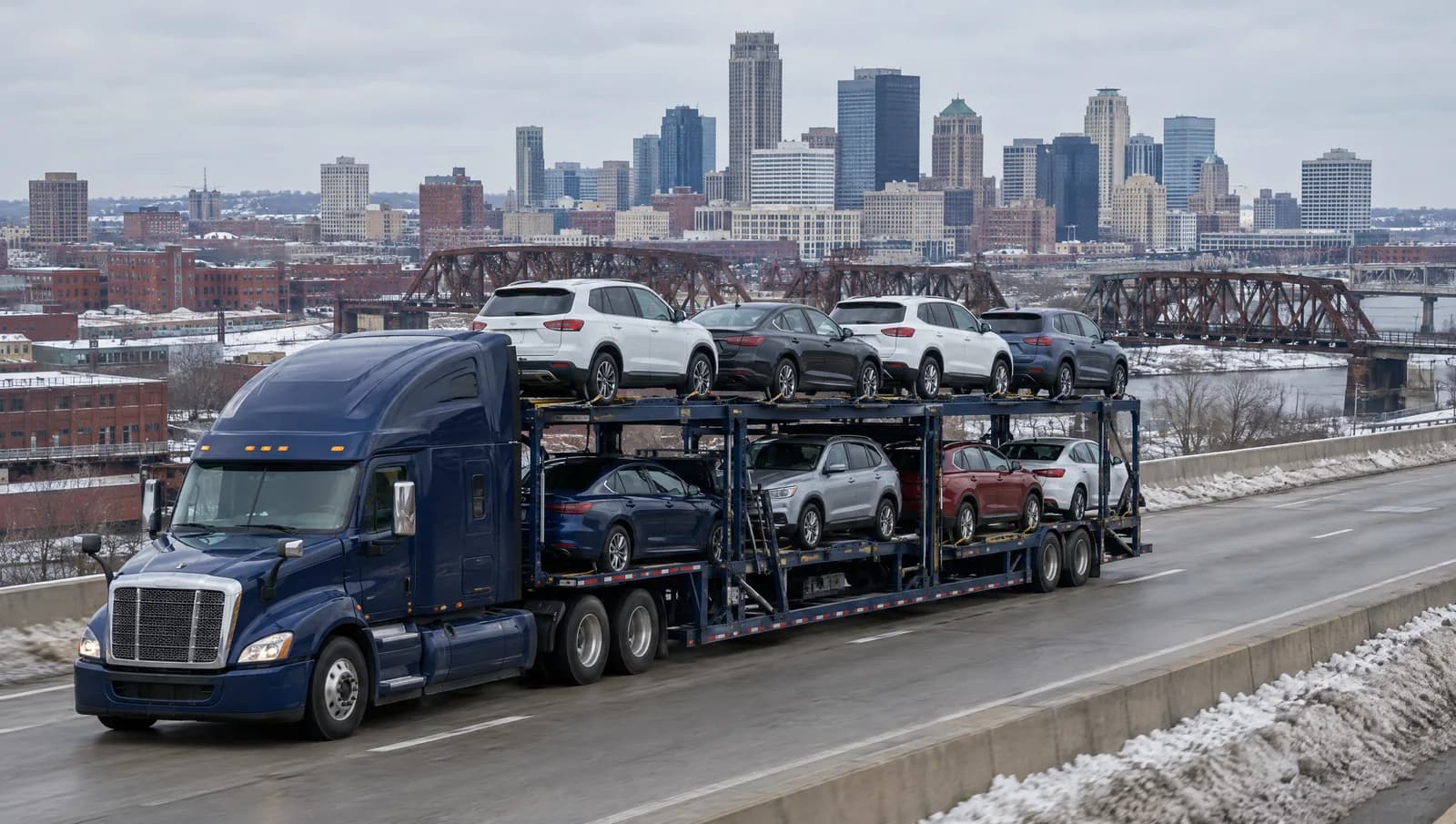
A full-size open car hauler is roughly 75 feet long and up to 13 feet 6 inches tall, and it carries several cars at once. It cannot turn into most cul-de-sacs, pass under low branches or power lines, or use a street where the city restricts commercial vehicles. Some HOAs and apartment complexes ban trucks like this outright. So "door to door" really means door to as-close-as-the-truck-can-safely-get.
When the driver asks to meet you
If the truck cannot reach your address, the driver will call and suggest a nearby place to meet, usually a large, level parking lot close to your home or to an interstate exit. The lot has to be big enough for the truck to turn and load, and it has to be somewhere you are allowed to use, so check the property's rules. A meeting point is a convenience for the driver, and it usually saves time rather than costing you money, because a long detour off the route is hours the driver has to price in.
Rural addresses and tight spots
Farm roads, long private drives, mountain switchbacks and gated communities all make a pickup harder. You may be asked to meet at the nearest town with a large lot, and pickup can take longer because the driver has to leave the route. Tell me your real address when you ask for a quote. The estimate is built from ZIP codes, and I would rather price the difficulty in than have it surface on pickup day.
Pickup and delivery windows
You will not get an appointment for a single hour. The driver works to a pickup window and calls ahead when close, and dispatch typically takes 1–3 business days. All dates are estimates, because weather, traffic, mechanical issues and hours-of-service limits move a schedule. Keep the day of the window flexible, and give me a phone number that gets answered.
What happens at your door, in order
- The driver calls to confirm where and when to meet.
- You walk around the car together, and every existing mark goes on the Bill of Lading.
- You photograph the car with the truck in frame, then hand over the keys and any alarm instructions.
- You keep your copy of the Bill of Lading.
- At delivery you repeat the walk-around before you sign, and write anything new on the form.
- You pay the balance to the driver by the method stated on your dispatch confirmation.
Who can be there instead of you
Someone aged 18 or over has to be present at both ends to inspect the car and sign the Bill of Lading. It does not have to be you. A friend, family member, neighbor or dealership contact works, as long as you tell me who in advance. The 10-minute preparation checklist covers what to do before the driver arrives.
Door to door on a long haul
The same rules apply on a cross-country run, where a good meeting point matters more because the driver has a full trailer and a tight schedule. The cross-country guide has the rates and transit times, and the price guarantee explains what is fixed once a carrier is confirmed.
Written by Brian Smith, Auto Transport Specialist at Leader Auto Ship LLC — FMCSA licensed property broker, MC #1638331, DOT #4232283. Verify the licence yourself.