Updated September 29, 2026 · By Brian Smith
What enclosed transport is
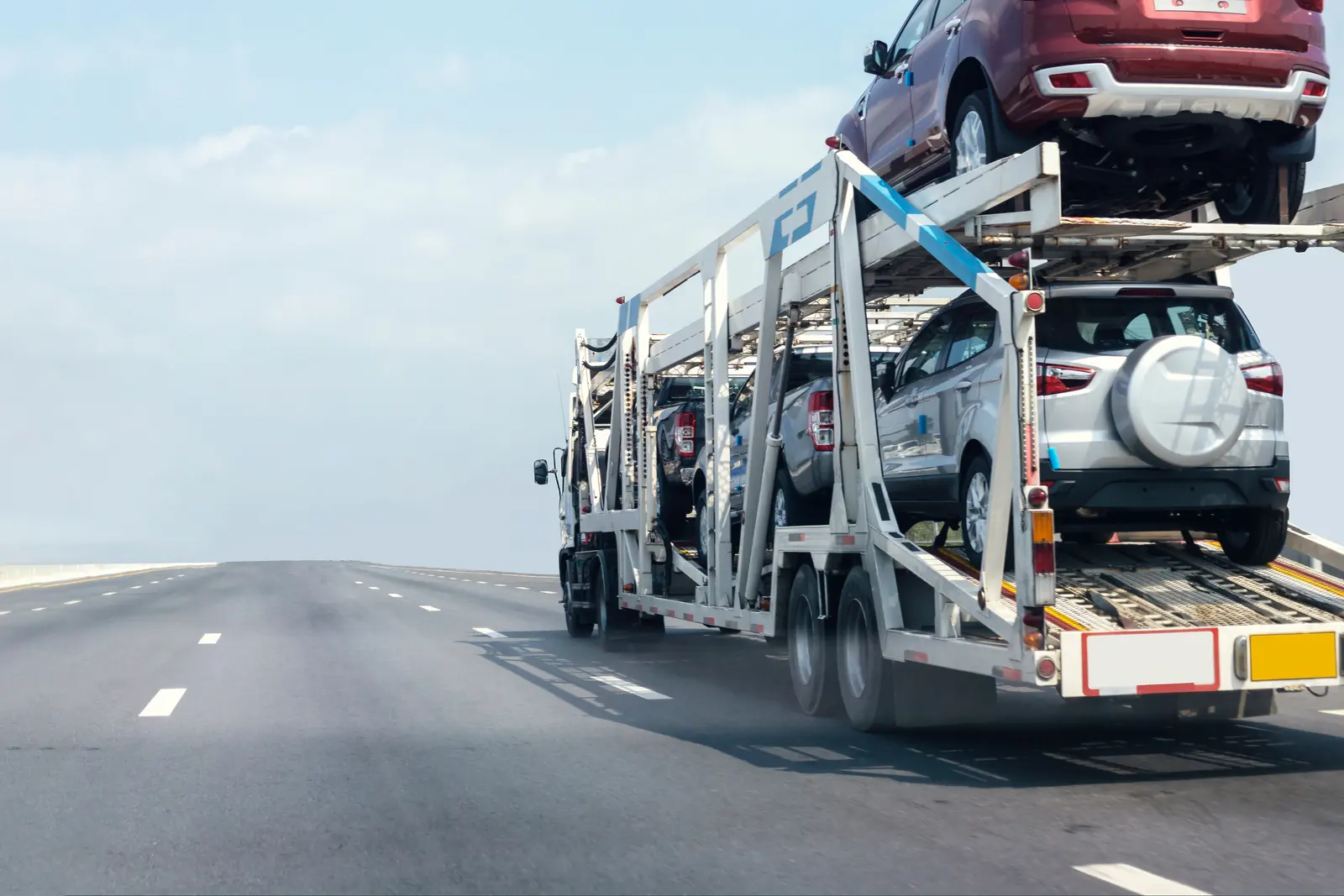
Your car rides inside a closed trailer, out of the rain, sun, road salt and hail, and out of range of the stones the truck ahead throws up. An open hauler carries a full deck of cars. An enclosed trailer carries far fewer, and many load with a hydraulic lift gate instead of ramps, which matters for a car that sits low. The tie-downs are soft nylon straps rather than chains.
What the premium is
Across the 43 routes I price, enclosed runs a median of 42% above open on the same route, ranging from 8% to 92%. Enclosed bands overall span $700 – $3,100, against $500 – $2,050 for open, as of September 2026. The table shows six routes from short to long so you can see the gap at different distances.
| Route | Miles | Open | Enclosed | Premium |
|---|---|---|---|---|
| Las Vegas to Los Angeles | 270 | $500 – $700 | $700 – $850 | +29% |
| Washington to California | 1,140 | $750 – $900 | $950 – $1,150 | +27% |
| Virginia to Texas | 1,350 | $750 – $1,100 | $1,100 – $1,400 | +35% |
| Boston to Miami | 1,500 | $1,150 – $1,450 | $1,750 – $2,100 | +48% |
| Chicago to Los Angeles | 2,015 | $1,150 – $1,300 | $1,750 – $1,950 | +51% |
| New York to Los Angeles | 2,790 | $1,500 – $1,750 | $2,300 – $2,500 | +48% |
The gap is not a fixed percentage. It moves with the corridor and the season, so ask for the open and enclosed quotes together rather than adding a rule-of-thumb premium to the open price.
Who should pay for it
- The car is worth more than about $70,000.
- It is a classic, an antique or a fresh restoration.
- Ground clearance is under roughly 5 inches, so a steep ramp is a risk.
- The paint is original, custom or matte, and a chip cannot be touched up.
- It is a show car, a one-off, or simply irreplaceable to you.
Who should not
A daily driver, a lease return or a family SUV belongs on an open carrier for most people. About nine in ten vehicles move open, including nearly every new car delivered to a dealership, and there are far more open trucks on the road, so a pickup is usually quicker. If a stone chip would ruin your week, choose enclosed. If you would wash the car and shrug, keep the difference. The open vs enclosed guide walks through the decision.
Scheduling: fewer trucks, so book earlier
Enclosed trailers are scarcer than open carriers, so a pickup date takes longer to line up, especially around the snowbird migrations and the spring and summer moving season. Give a wider pickup window and book earlier than you would for an open shipment. Flexibility is the biggest lever you have on both price and timing.
Insurance: check the number, not the label
Enclosed carriers typically carry higher cargo limits than open carriers, but the word "enclosed" on a quote does not tell you the limit. The carrier's cargo policy is what pays for damage in transit, so ask for the certificate of insurance before the car moves and compare the cargo limit with what the car is worth. If it is lower, ask for a different carrier. The insurance guide explains what the policy covers and what it excludes.
Questions to ask any enclosed carrier
- Is the trailer hard-sided or soft-sided, and how many cars will be on it?
- Is my car loaded by lift gate or by ramp?
- What are the cargo limit and the deductible, and can I see the certificate?
- How are the wheels secured?
- Who is the driver, and will they call before pickup?
"Enclosed" is not the same as "white glove"
A covered trailer protects a car from weather and road debris. It does not, by itself, tell you how careful the driver is or how well the trailer is kept, and some brokers use the two words interchangeably. Ask any broker who the driver is and what their cargo limit is before you book. For long trips, the cross-country guide shows what enclosed costs on the long-haul routes.
Written by Brian Smith, Auto Transport Specialist at Leader Auto Ship LLC — FMCSA licensed property broker, MC #1638331, DOT #4232283. Verify the licence yourself.