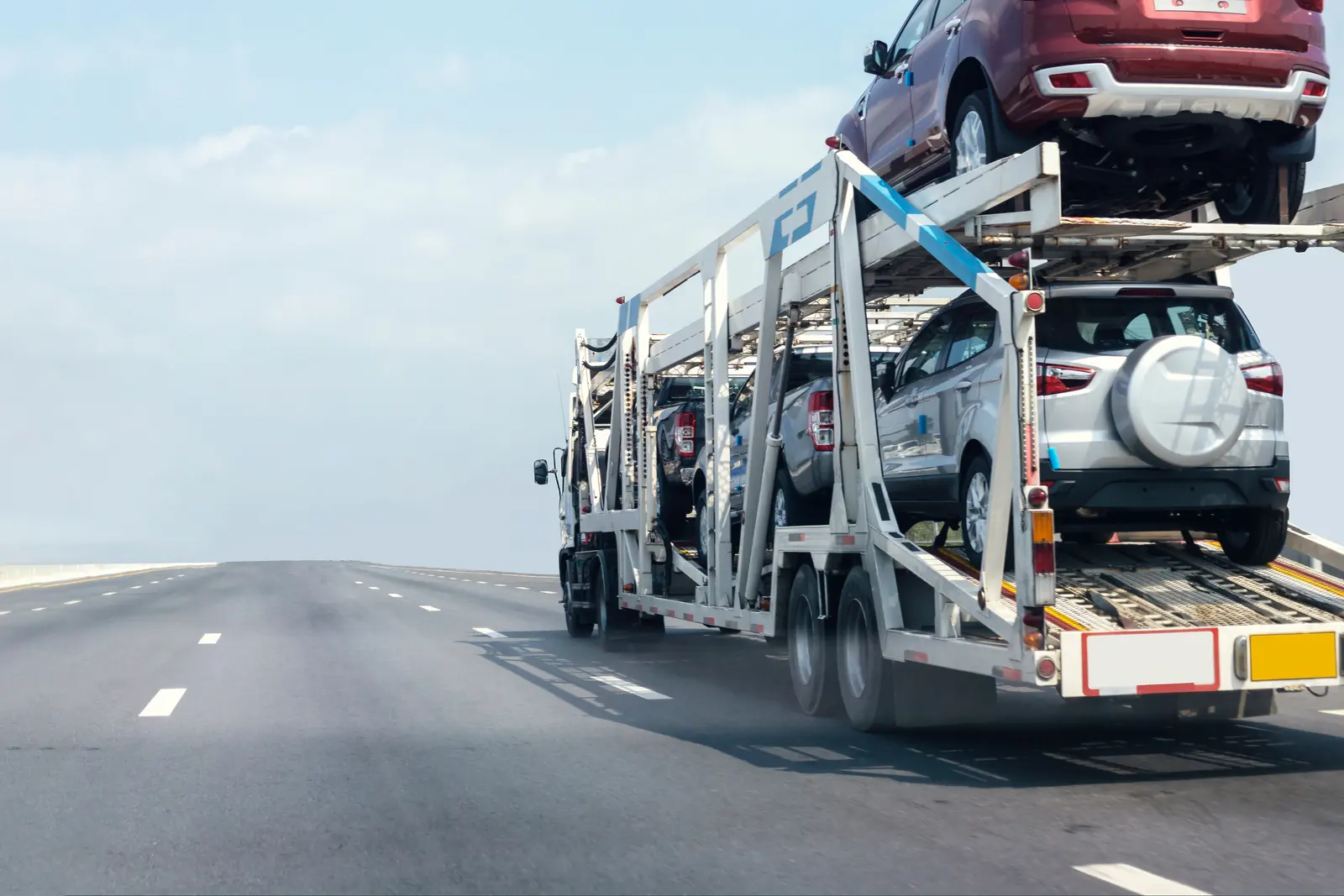
Indianapolis to Tampa is about 1,100 miles, 3–5 days on the truck, and $1,000–$1,150 for a running car on an open carrier. Why Indiana gets better carrier availability than its size suggests, what the autumn rush does to the price, and how the pickup works.
Indiana to Florida is a short, well-served lane with one thing going for it that most Midwest states do not have: Indianapolis sits at the crossing of several interstates and runs one of the larger wholesale auto auctions in the region, so trucks are coming and going all year. For you that means a pickup gets on a truck quickly, even in September and June when comparable routes go quiet. The numbers: about 1,100 miles from Indianapolis to Tampa, 3–5 days on the truck, and $1,000–$1,150 for a running sedan or SUV on an open carrier.
How much does it cost to ship a car from Indiana to Florida?
My sheet has the southbound leg at $1,000–$1,150 open and $1,300–$1,650 enclosed, door to door, for a standard running vehicle. That is the whole price, cargo insurance and my fee included. Nothing is charged when you book; a deposit is collected once a carrier is assigned with a pickup date, and the balance is paid to the driver at delivery.
What moves the number inside the band is the same as everywhere: a larger vehicle, a car that does not run, an address well off the interstate, and above all a fixed pickup date in the autumn rush. A few days of flexibility is the cheapest thing you can offer a carrier.
If you want a range for your own two ZIP codes first, the cost calculator gives one without asking for your details.
How long does it take?
Three to five days on the truck for the 1,100 miles from Indianapolis to Tampa; Fort Wayne, South Bend and Evansville sit inside the same window. Dispatch — the time between booking and a carrier committing to a pickup date — usually takes one to three business days, and this is where Indiana does better than average. Because the Indianapolis auction market keeps freight moving on the lane year-round, a June or September booking here tends to dispatch faster than on comparable Midwest routes where the trucks only run in season.
Winter pickups occasionally slip a day after heavy snow in northern Indiana. The lane itself stays open; it is I-65 and I-75, not a mountain pass.
Which route does the truck take?
I-65 south through Louisville and Nashville, then I-75 through Chattanooga and Atlanta into Florida. It is fast and it is busy, which is what you want in a corridor — the more trucks running it, the sooner one has space for your car and the less any one driver can charge for taking it.
When is the best time to ship from Indiana to Florida?
The autumn southbound peak and the spring northbound peak, same as every snowbird lane. From October into December, more cars are heading to the Gulf Coast than trucks want to carry, and the rate rises with the demand; from March into May it happens in reverse. If your dates are your own, ship in the shoulder weeks either side of the rush, or book several weeks ahead of it so the carrier is arranged before the squeeze. If you are a seasonal resident doing this every year, the snowbird car shipping guide explains booking both legs at once.
The process from quote to delivery
- You send the pickup ZIP, delivery ZIP, the vehicle and your first available date. I quote the lane by hand and call you back, usually within the hour.
- You book. No deposit. The order goes on the national dispatch board and I work the carriers running I-65 and I-75 that week.
- A carrier accepts. I verify their FMCSA authority and cargo insurance before you hear the name, then give you the pickup window.
- The driver calls the day before pickup to confirm the time and the spot — the door if the street allows a car hauler, a nearby lot if it does not.
- You inspect the car together at pickup and sign the Bill of Lading with photos attached.
- Three to five days later the driver calls ahead in Florida. You inspect against the pickup photos, sign, and pay the driver the balance.
Open or enclosed?
This lane is mostly family sedans and SUVs, and open transport at $1,000–$1,150 is the right choice for them. Enclosed at $1,300–$1,650 is for the cars that justify it: a classic going to winter storage, a low-clearance sports car that needs a lift gate, or anything worth more than an open carrier’s cargo limit. The open versus enclosed guide walks through the decision.
Where pickups and deliveries happen
In Indiana: Indianapolis and its suburbs most often, plus Fort Wayne, Evansville and South Bend. In Florida: Tampa, Naples, Fort Myers and Orlando, and the Gulf Coast communities in between where a large share of Indiana’s winter residents end up. All door to door, with the usual note that a 75-foot hauler cannot always get down a residential street or through a community gate; when it cannot, the driver arranges a meeting point a few minutes away.
Shipping north: Florida to Indiana
The return leg runs $950–$1,250 open and $1,350–$1,600 enclosed. It peaks in April and May with the rest of the snowbird return, but what makes this direction distinctive is the auction flow: alongside the seasonal residents coming home there is a steady stream of vehicles bought in Florida and heading to Indiana dealers, and that extra freight keeps trucks on the lane in months when other Midwest routes go quiet. Both directions are on the Indiana to Florida route page.
Buying a car at auction and shipping it
Because of the Indianapolis wholesale market, a meaningful share of this lane is dealer and auction traffic — cars bought in Indiana heading to Florida buyers, and the reverse. If that is your situation, the pickup works a little differently: the auction or dealer releases the car to the carrier against a gate pass or release form, so I need the lot’s contact and the release details when you book. Auction lots are used to car haulers and the pickup itself is usually quick.
What goes wrong, and how to avoid it
The quote that is too low. An Indiana to Florida car quoted at $700 in October will be posted at $700, and no carrier heading south on a full truck will take it. The car sits and you get a call for more money. If a quote is well under the band above, ask what happens if nobody accepts it at that price. The guide to spotting a bad broker covers the other warning signs.
The rushed inspection. The car is only on the truck for a few days, so people skip the walkaround. The pickup Bill of Lading is what any damage claim is settled against; note every existing mark, photograph the car with the truck in frame, and do the same before you sign at delivery. Do you need insurance to ship a car explains the coverage.
Getting the car ready
- Wash it so the inspection is honest.
- About a quarter tank of fuel.
- Take out personal belongings; they are not insured on the truck.
- Remove or disable the toll transponder.
- Start it the day before pickup if it has been sitting. A car that does not start is a winch job, priced differently.
The full checklist is in preparing your vehicle for transport.
Questions people ask about this lane
Can you pick the car up from a dealer or storage unit?
Yes. I need the location’s contact and any release paperwork, and the driver coordinates directly with them.
Can someone else receive the car in Florida?
Anyone you name can — a neighbour, a family member, a property manager. They inspect, sign the Bill of Lading and pay the driver the balance, so brief them on what to check.
When you have the car and rough dates, the Indiana to Florida route page has the quote form, and I am on (567) 666-4241 seven days a week.