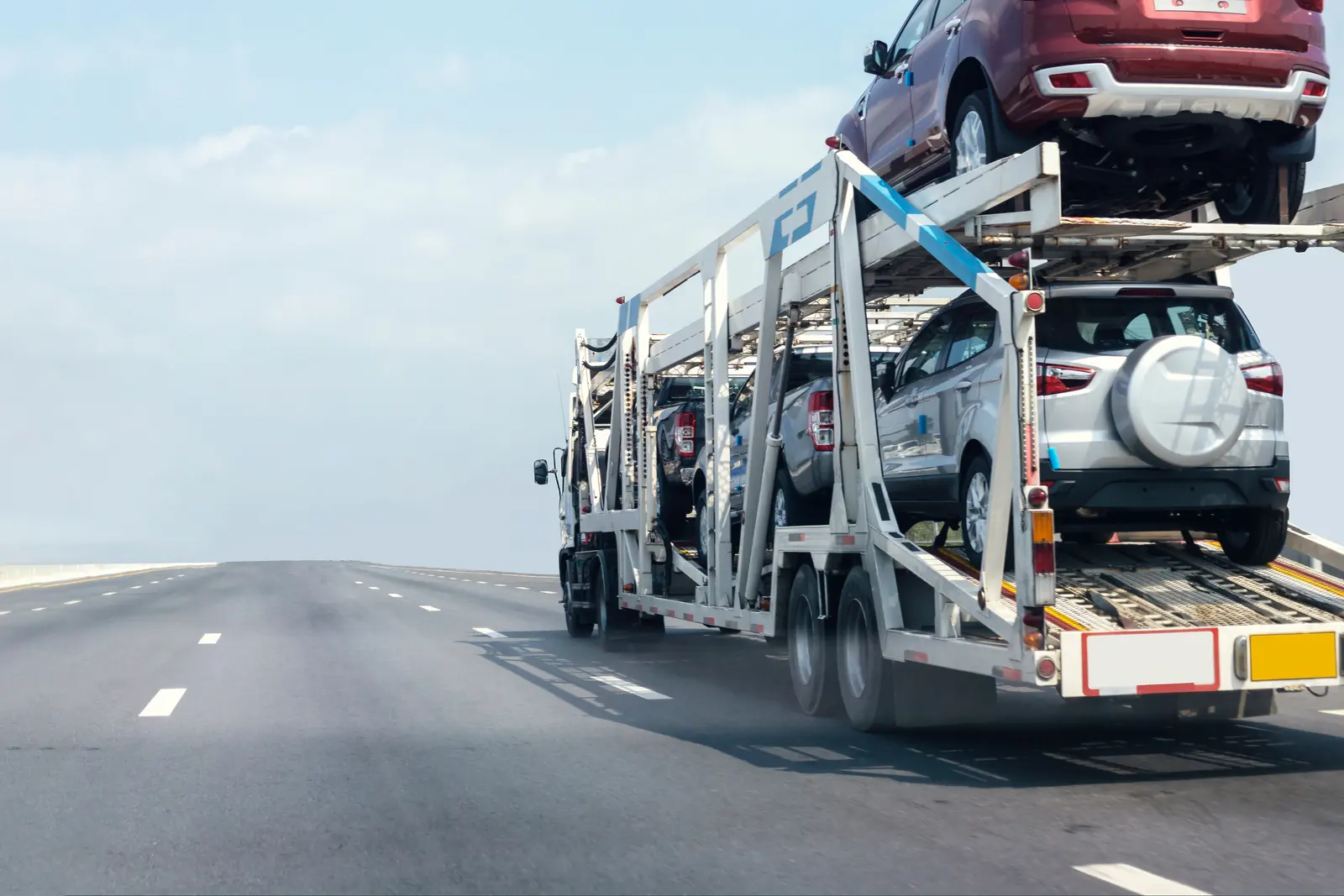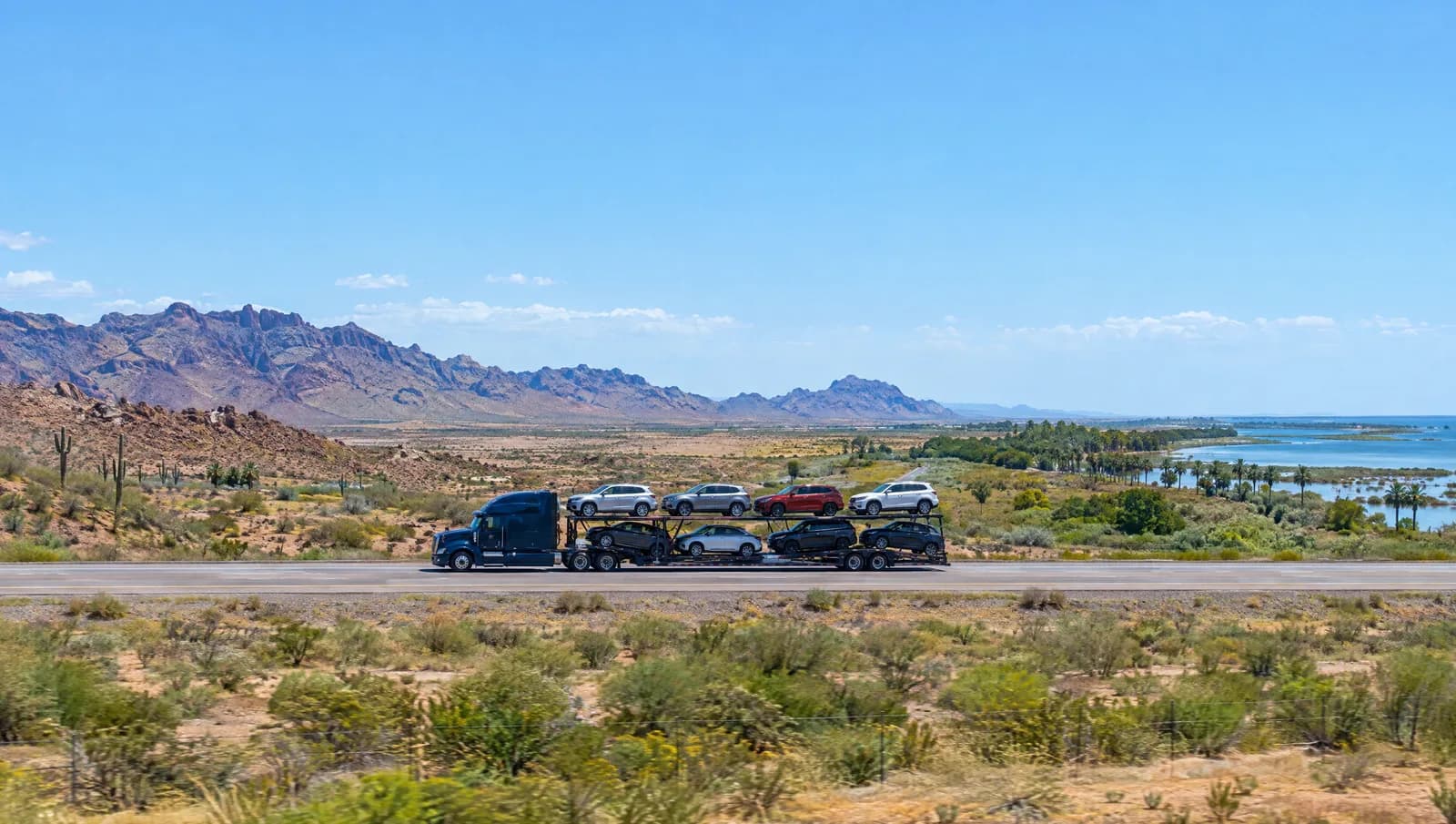
About 2,650 miles, 7–10 days on the truck, and $1,750–$1,900 for a running sedan or SUV on an open carrier. Here is how the move actually works, what changes the price, and how to book it without getting burned.
Shipping a car from California to Florida is one of the longest domestic moves you can book, and one of the most predictable. The truck runs Interstate 10 across the bottom of the country, the weather rarely interferes, and there are enough carriers on the corridor that your car will not sit waiting for one. The short version: plan on 7–10 days once the car is loaded, and a price of $1,750–$1,900 for a running sedan or SUV on an open carrier. Everything below explains where those numbers come from and how to keep them from moving on you.
How much does it cost to ship a car from California to Florida?
For a standard running car — a Camry, a RAV4, an Accord, a mid-size SUV — the door-to-door rate on my sheet is $1,750–$1,900 on an open carrier and $2,500–$2,700 enclosed. That is the whole price: fuel, the driver, the carrier’s cargo insurance and my fee. Nothing is charged when you book. A deposit is collected only after a licensed carrier has accepted your car with a pickup date, and the balance goes to the driver at delivery.
Where in the band you land depends on a few things you control and a few you do not:
- The vehicle. A crossover costs more than a sedan and a full-size pickup more again, because the carrier is selling deck space and weight.
- Whether it runs. A car that cannot start, steer and brake needs a truck with a winch, and that is a smaller pool of carriers.
- Your dates. A flexible pickup window lets me place the car on a truck that is already coming through. A single fixed day means paying a driver to change plans.
- Where exactly the addresses are. Los Angeles to Miami is the easy version. A rural pickup an hour off the interstate adds a detour the driver prices in.
- The season. Demand toward Florida rises in autumn as winter residents head south, and the rate follows.
If you want a number before you talk to anyone, the cost calculator will give you a range for any two ZIP codes without asking for an email. The band above is what I actually book this lane for.
How long does shipping from California to Florida take?
About 2,650 miles from Los Angeles to Miami, which works out to 7–10 days on the truck. Carriers cover roughly 500 miles a day, the driver has mandated rest, and an open carrier is dropping and collecting other cars along the way. San Diego, San Jose and Sacramento pickups sit inside the same window; a Northern California collection sometimes adds a day at the front.
Add the dispatch time on top of that. From the moment you book, it typically takes one to three business days to have a carrier accept the load and give me a pickup date. So a realistic end-to-end picture is: book today, pickup inside the week, delivery 7–10 days after the car is loaded. If you need the car in Florida on a specific date, work backwards from that and give yourself two weeks.
Which route does the truck take?
Almost every carrier runs I-10 the entire width of the country — Phoenix, Tucson, El Paso, San Antonio, Houston, New Orleans, Mobile, then into Florida on I-10 and down I-75 or I-95 depending on where the car is going. It is the most weather-reliable transcontinental route in the United States. The northern coast-to-coast lanes cross the Rockies and the Plains, where a January storm can cost two or three days; this one does not, which is why I quote it with confidence in winter.
The one seasonal thing to know is hurricane season, June through November. A named storm heading for Florida can pause deliveries for a few days, and a carrier will not drive into an evacuation zone. It is rare, it is out of anyone’s control, and when it happens the car waits safely inland rather than the whole booking falling apart.
How the process works, step by step
- You send the pickup ZIP, delivery ZIP, the vehicle and your first available date. I quote the lane by hand and call you back — usually within the hour.
- You book. No money changes hands. Your order goes on the national dispatch board and I start working carriers that run I-10.
- A carrier accepts the load. I check their FMCSA authority and cargo insurance before I tell you who is coming, then you get the carrier name and the pickup window.
- The driver calls ahead, usually the day before. Big trucks cannot always reach a residential street, so a nearby lot or wide road is a normal meeting point.
- At pickup you and the driver inspect the car together and sign the Bill of Lading with photos. This document is your protection — do not rush it.
- The car crosses the country. The driver’s number is yours for updates. I follow the load from my end.
- At delivery you inspect the car against the pickup photos, sign, and pay the driver the remaining balance.
Open or enclosed for this route?
Open transport is the right answer for most cars, including near-new ones. Your car rides on the same two-level trailer that delivers new cars to dealerships, and the carrier’s cargo insurance covers it. It costs $1,750–$1,900 on this lane.
Enclosed runs $2,500–$2,700 and is worth it for the cars that make this lane unusual. California and Florida hold the two biggest concentrations of collector and exotic cars in the country, and a higher share of what I move between them goes enclosed — a low-clearance car that needs a lift gate, a classic with original paint, anything you would not want exposed to 2,650 miles of weather and road debris. If the car is worth more than the open carrier’s cargo limit, enclosed is not a luxury; it is the coverage. The open versus enclosed guide walks through the decision in more detail.
When is the best time to ship a car from California to Florida?
Outside the autumn southbound rush, this lane is steady all year. From roughly October into December more cars are heading to Florida than trucks want to carry, and the rate creeps up. If your dates are flexible, shipping in the shoulder weeks either side of that window, or simply booking a few weeks ahead of it, is the single biggest thing you can do for the price. A car bought at auction or a job relocation cannot always wait, and that is fine — it just means booking as soon as you know the dates rather than the week before.
Where do pickups and deliveries happen?
On the California end I collect most often in Los Angeles, San Diego, San Jose and Sacramento. In Florida the common deliveries are Miami, Orlando, Tampa and Fort Lauderdale. Every one of those is door-to-door, with the usual caveat: a 75-foot car hauler cannot turn around in a cul-de-sac, and some gated communities will not let one in. When that is the case the driver will ask to meet at a shopping centre or a wide street nearby. It is a five-minute drive, not a terminal across town.
Shipping the other way: Florida to California
The return leg has its own page and its own price. Florida to California runs $1,450–$1,700 open and $2,250–$2,500 enclosed — a little less than the eastbound trip, because the two directions do not carry the same volume. The route, the transit time and the process are identical. Details are on the Florida to California route page.
What goes wrong on this lane, and how to avoid it
The most common problem is not damage; it is a car that does not move. A broker quotes $1,300 for a lane that costs $1,750, posts it at that rate, and no driver takes it. The car sits a week, then comes the call asking for more money. If a quote for California to Florida is far below the band above, ask the company what happens if no carrier accepts the load at that price. The honest answer is the one I give: you wait, widen your dates, or raise the rate — and I tell you that before you book, not after. The guide to spotting a bad broker covers the other warning signs.
The second problem is a rushed inspection. A claim for transit damage is settled by comparing the pickup Bill of Lading to the delivery condition. If nothing was written down at pickup, there is no “before”, and the carrier’s insurer will not pay for damage that cannot be shown to have happened on the truck. Ten minutes with the driver at each end is the whole difference. The insurance guide explains what is and is not covered.
How to get the car ready
- Wash it, so the pickup inspection can see every existing scratch.
- Leave the tank around a quarter full. A full tank is weight the carrier does not want.
- Take out personal items. Most carriers tolerate a small amount in the trunk, but none of it is insured.
- Disable or hand over any toll transponder and note the alarm procedure for the driver.
- Have a set of keys ready to travel with the car.
There is a full checklist in preparing your vehicle for transport.
Questions I get about California to Florida
Can I put things in the car?
Ask first. Many carriers allow a small amount of personal belongings in the trunk, some do not, and none of them insure it. Anything valuable travels separately.
Does the car go on one truck the whole way?
Usually, yes. On a long lane like this the same driver typically carries the car from pickup to delivery. If a carrier does transfer a vehicle at a terminal, you are told before it happens.
What if I am not in Florida when the car arrives?
Anyone you name can accept delivery — a family member, a property manager, a neighbour. They inspect the car, sign the Bill of Lading and pay the driver’s balance on your behalf, so brief them on what to look for.
That is the whole move. If you have a car, a ZIP code on each coast and a rough date, the California to Florida route page has the current bands and a quote form, and I answer the phone at (567) 666-4241 seven days a week.